
Criminal Cases in the Lanier County Courts
Lanier County belongs to the Alapaha Judicial Circuit. Superior Court is the general-jurisdiction trial court for felonies, and its clerk keeps indictments, accusations, dockets, judgments, dispositions, and certified copies. The official Lanier clerk profile also identifies Juvenile Court, whose files are not ordinary public criminal records. Magistrate Court handles warrants, first appearances, and preliminary matters. Probate Court may hear traffic or misdemeanor matters assigned by law. Lakeland Municipal Court holds city ordinance and traffic citation files.
Venue matters. A search at the Superior Court counter will not necessarily reveal a Lakeland citation, and a municipal payment result does not establish the outcome of a felony prosecution. Start with the court named on the citation, warrant, bond paper, or charging document. If that document is unavailable, ask the clerk which court received the case.
The distinction also shapes the documents available. Magistrate material may establish a warrant, first appearance, or preliminary step before a felony file reaches Superior Court. A municipal citation remains with the city court unless later proceedings create another case. Probate jurisdiction is limited to matters assigned by Georgia law. Searching each venue by the same name without first identifying the event can produce several partial answers instead of one reliable history.
Lanier Criminal Files at Main Street
The main criminal-case counter is the Clerk of Superior Court at 56 W. Main Street, Suite 5, Lakeland, GA 31635. Call 229-482-3594 before traveling. The posted weekday schedule is 8:00 a.m. to noon and 1:00 p.m. to 5:00 p.m., so the office closes at midday. Ask first for the docket and final disposition. Those two items often answer whether charges were filed, changed, dismissed, tried, or resolved by plea.
56 W. Main Street, Suite 5
Lakeland, GA 31635
229-482-3594
Weekdays, 8 a.m.-noon and 1-5 p.m.
The clerk's profile confirms the office and its courts, but it does not publish copy prices or archive retrieval rules. Request the current plain-copy and certification fee before ordering. For a record correction, a certified disposition carries more weight than a payment receipt or a screen capture.
Give the clerk enough detail to separate people with similar names. A middle name, approximate case year, arrest date, OTN, and known charge can help. Ask whether the file is active, closed, archived, or restricted before requesting every page. A docket sheet may identify the exact judgment or sentencing order needed, which can reduce copy work and make a later GCIC correction easier to document.
How to Search Case Records
Lanier County has no verified comprehensive public case-name portal. The dependable route begins with the correct clerk. PeachCourt may expose filings or documents for participating courts, but its presence does not prove that a specific Lanier criminal docket is online. The Georgia Courts directory is the fallback for court contacts. Use a full name, approximate filing or arrest year, and case or citation number when known.
- Identify the court from the ticket, bond paper, warrant, or charge.
- Call the clerk with the full name, approximate year, and case number if known.
- Check PeachCourt, then confirm Lanier coverage and document availability with the clerk.
- For a Lakeland citation, search the exact citation number through the municipal nCourt interface.
- Request the docket, final disposition, and certified copies directly from the custodian.
The public Lakeland interface is citation-based, not a party-name criminal search. Its captured fields are:
| Field Label | Type | Required | Notes |
|---|---|---|---|
| Citation | Text | Yes | Include letters; retry without a leading zero if needed |
| Terms agreement | Workflow | Yes | Acceptance precedes payment |
| Payment | Transaction | Conditional | Unavailable on or after the court date |
| Receipt | Output | Conditional | Keep confirmation, but it is not necessarily a certified disposition |
Lanier Court Platforms Have Limits
Electronic access is split by court and product. The Georgia Superior Court Clerks' Cooperative Authority helps locate the clerk, while PeachCourt supports participating courts. Neither should be described as a complete free statewide criminal search. The municipal nCourt tool reaches a different record set. When an online result is absent, contact the custodian instead of treating the blank screen as proof that no case exists.
The manifest's linked PeachCourt source shows the document platform used for electronic court work.

For Lanier County, the clerk must still confirm whether the case and requested document are remotely available.
What the Case File Shows
A Lanier County criminal file tracks the prosecution rather than just the arrest. It can show the charging instrument, each filed count, motions, hearings, plea or verdict, sentence, and closure. The booking charge may not match the indictment or accusation. Read the disposition count by count, since one count can be dismissed while another ends in conviction.
Operational identifiers tie the layers together. An OTN can connect a fingerprint arrest cycle to the court outcome. The case number identifies the judicial file. Names and dates help with searching but do not always prove identity. When reviewing one's own record, compare all identifiers and confirm that each charge has a reported result. “Arrested” describes the event and is never a final disposition.
| Case Number & Court | Identifies the file, court, division, filing date, and status. |
|---|---|
| Charging Document | Shows accusation or indictment counts, statutes, and offense level. |
| Docket Entries | Lists filings, arraignment, motions, pleas, trial events, revocation, and closure. |
| Hearing Dates | Provides scheduled date, time, place, and judge when entered. |
| Disposition & Judgment | Records the result for each count, such as conviction, acquittal, dismissal, or nolle prosequi. |
| Sentence & Conditions | May state custody, probation, fines, costs, restitution, and other terms. |
Fixing a Missing Lanier Disposition
A GCIC history can show an arrest cycle without its final judicial outcome. Start at the Lanier clerk. Obtain the certified disposition, then ask the court, prosecutor, or originating agency to send or authorize the correction. The Georgia Bureau of Investigation explains that GCIC cannot rewrite source-agency data without proper documentation.
Terms also matter. “Nolle prosequi” means the prosecutor declined to continue that count. A “dead docket” pauses prosecution and is not automatically an acquittal. “No-bill” means a grand jury did not indict. A dismissal ends the filed charge but does not by itself erase the arrest cycle. Georgia record restriction and court sealing are separate processes under O.C.G.A. §35-3-37.
Note: A certified Lanier County disposition is the key bridge between the court file and a missing GCIC outcome.
Stages of a Criminal Case
A criminal case may begin with an arrest or citation, but the filed court record takes shape when a prosecutor submits an accusation or seeks an indictment where required. A jailed warrantless arrest generally requires prompt judicial review. Arraignment states the charge and receives a plea. Motions and other pretrial work follow. The matter may end through dismissal, plea, trial, or another lawful disposition, followed by sentencing and possible appeal.
Case flow: Charges Filed › Arraignment › Pretrial › Plea or Trial › Disposition › Sentencing
State and Federal Court Layers
The Superior Court Clerks' Authority supports Georgia's clerk network. The manifest's official authority source illustrates that statewide layer.
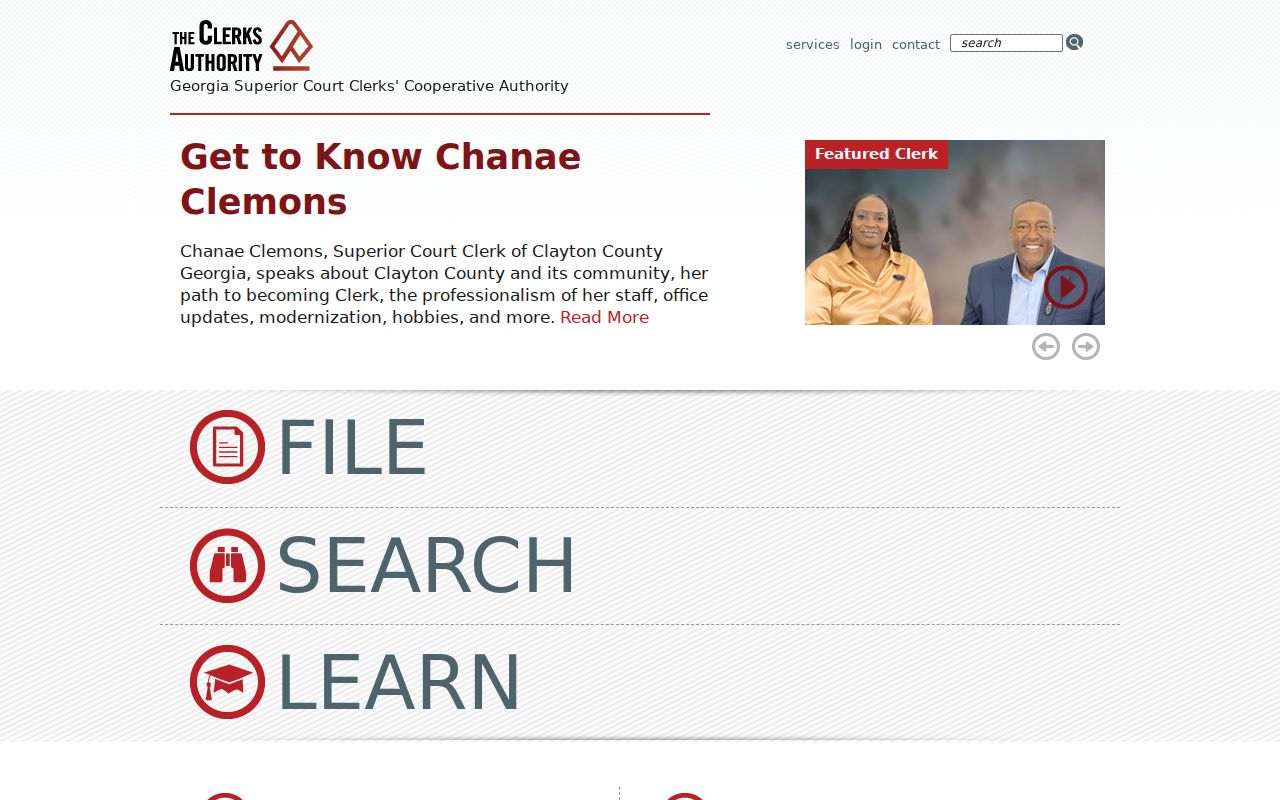
Its directory helps locate Lanier's custodian, but the Lanier clerk remains the source for the county file and certified disposition.
Federal charges are separate. Lanier County lies in the Middle District of Georgia, and PACER holds federal dockets after registration. The manifest's linked source shows that federal access channel.
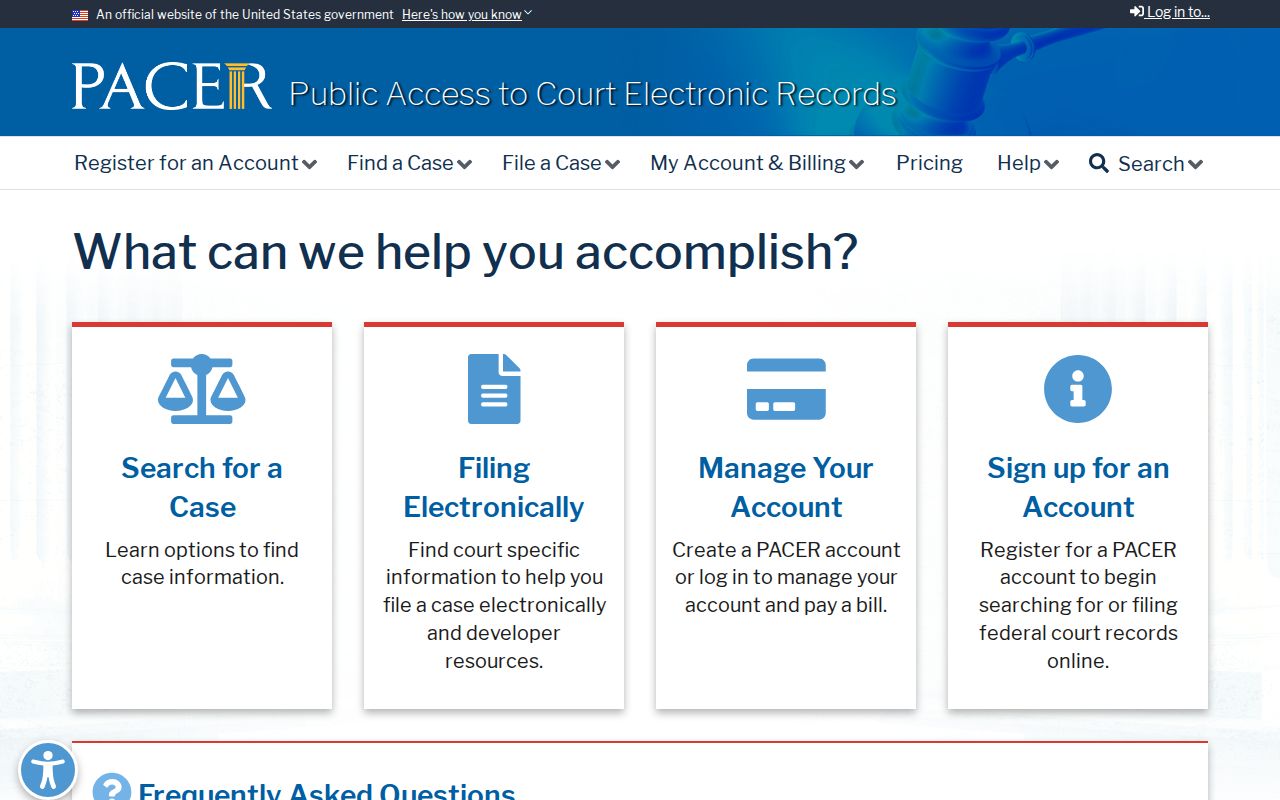
A federal case does not appear in Lanier Superior Court merely because the conduct occurred in the county. PACER ordinarily charges per page, subject to its published caps and quarterly waiver.
The usual PACER rate is ten cents per page, with a three-dollar cap for many documents. Fees are waived when a user's quarterly total is thirty dollars or less. Registration is still required. Search federal records only when the prosecuting authority or paperwork points to federal court; a county arrest or local allegation does not by itself create a federal docket.
Lanier Prosecution and Defense Records
The clerk's file is distinct from each lawyer's working file. The district attorney for the Alapaha Judicial Circuit decides which state charges to pursue. The public defender system represents qualifying accused people, while private counsel may hold separate correspondence and discovery. Criminal discovery under O.C.G.A. §17-16-4 is not the same as a public-record request.
The manifest's Georgia Public Defender Council source identifies the state defense system and circuit-office routes.

For the public court history, request the filed docket and disposition from the clerk rather than counsel's confidential case materials.
Access & Restrictions
Georgia law favors public access, but access is custodian-specific. The clerk controls judicial records. O.C.G.A. §50-18-70 states the open-record policy, while §50-18-71 sets the response and charge framework for agency records. Court access also follows judicial rules. An office need not create a new report to answer a question.
Juvenile files, sealed court records, victim details, Social Security numbers, medical information, and protected data may be closed or redacted. A pending investigation can also limit access to some agency material. If a Lanier County criminal case does not appear online, ask the clerk whether the file is paper-only, archived, sealed, or lodged in another court. Do not infer an acquittal or restriction from a missing search result.