
How to Check Criminal History in Lanier County
Begin by deciding which question the record must answer. The Lanier County Sheriff's Office holds its incident and arrest reports, local booking information, and sheriff-held warrant data. The Lanier Clerk of Superior Court keeps felony dockets, judgments, and certified dispositions. Lakeland Municipal Court keeps city citations. The Georgia Crime Information Center, or GCIC, maintains the state criminal-history repository, while Georgia Felon Search exposes only specified felony convictions.
Gather a full legal name, date of birth when lawfully available, spelling variants, an approximate event or filing year, and any incident, booking, warrant, citation, OTN, or case number. A number is often more reliable than a name. Then use the route that matches the event:
- Call the sheriff or creating police agency for an incident, arrest, booking, jail, or warrant record.
- Ask the correct court clerk for the docket and disposition; municipal citations and Superior Court felonies are separate.
- Use the official state product that matches the question, either Georgia Felon Search or a fuller GCIC history.
- Compare identifiers and charge dates instead of assuming every same-name result belongs to one person.
- Order a certified court disposition when proof of the final result or a record correction is needed.
Four Records Behind One Lanier Arrest
An arrest can generate four related but different files. The arresting agency writes the event narrative and probable-cause report. Lanier County Jail creates a booking entry if it receives the person. A prosecutor chooses the accusation or indictment, and the court clerk opens the judicial file. For a fingerprintable offense, the arrest cycle and identifying data also travel to GCIC; the responsible justice agency should later report the disposition.
| Record | Custodian | Best use |
|---|---|---|
| Incident or arrest report | Arresting agency | Event narrative, officer, alleged basis, and incident number |
| Booking record | Lanier County Jail | Intake time, booking charges, bond, holds, and release status |
| Court case | Appropriate clerk | Filed counts, docket events, judgment, and certified disposition |
| Georgia history | GBI/GCIC | Identity-linked Georgia arrest cycles and reported outcomes |
A booking charge may be changed, declined, dismissed, or replaced by an indictment. Read the records in time order and treat the judgment, not the intake allegation, as the court's result.
Official Georgia Background Checks
The Georgia Bureau of Investigation's Georgia Crime Information Center is the central repository. Its public Georgia Felon Search accepts first name, last name, date of birth, and sex and returns possible Georgia felony-conviction matches. It excludes misdemeanors, juvenile felony history, and restricted or sealed material. A no-record response is therefore not proof that no local arrest, misdemeanor, municipal case, or restricted event exists.
The state guide explains the product before a user opens it. This official view is useful for confirming its limits and price.
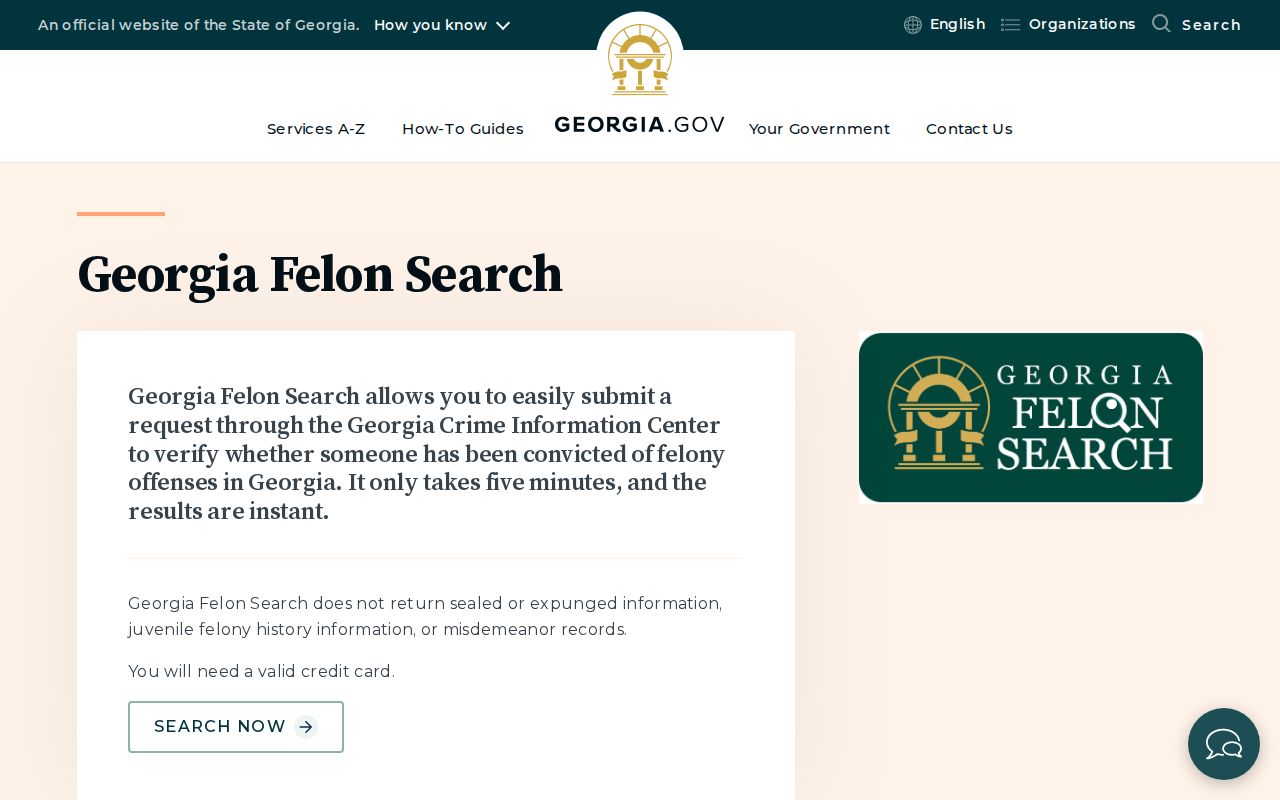
The guide makes the public felony product one layer of a review, not a replacement for the Lanier clerk or sheriff.
A broader personal Georgia history is ordinarily obtained through local law enforcement or GCIC procedures. Exact identity requires fingerprints. The Georgia Applicant Processing Service, operated through IdentoGO/IDEMIA, begins with an authorized agency service code; no enrollment center inside Lanier County was verified, so the appointment system should be searched by ZIP rather than assuming a local site.
Lanier Criminal Records and the $15 Search
The direct Georgia Felon Search application charges for a search even when no record is returned. If the possible-match list contains several entries, selecting more than one generates a separate charge for each selected record. The requester remains responsible for deciding whether a possible match is the intended person.
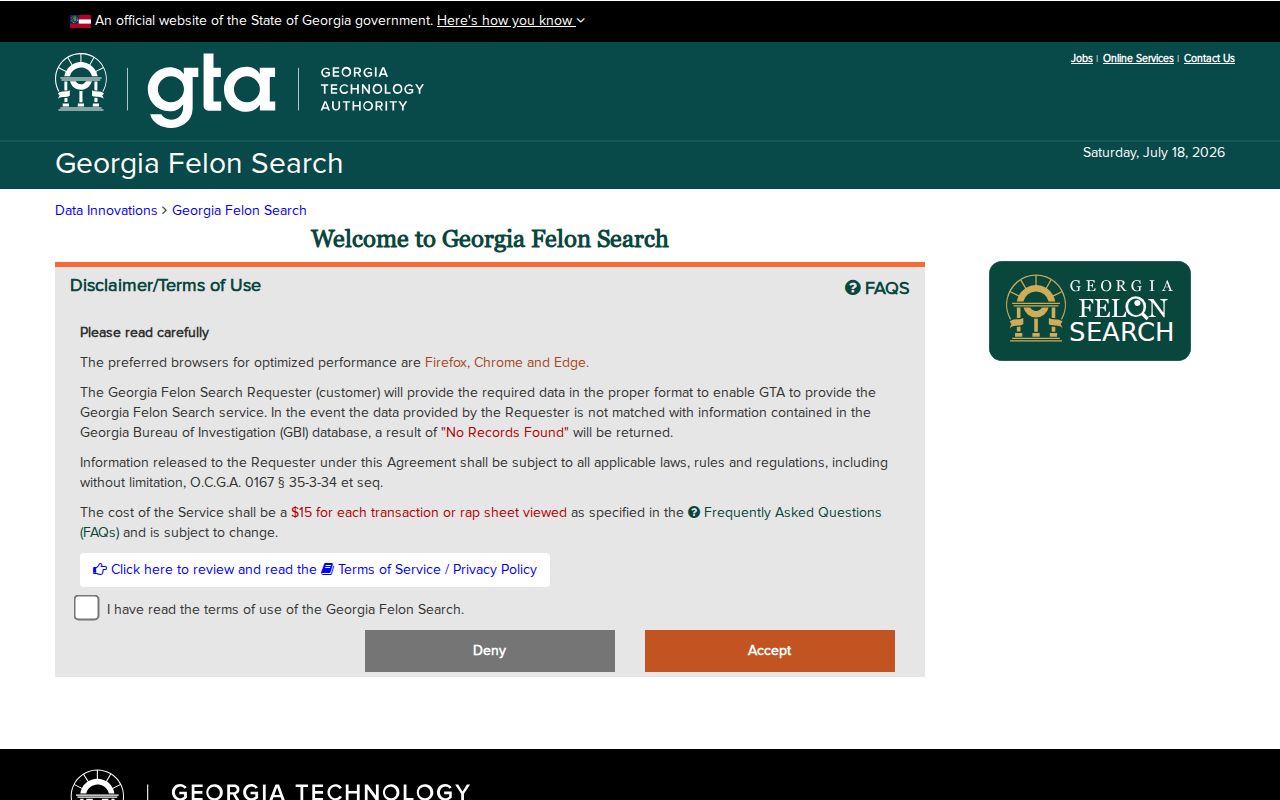
The form's fields help narrow a name search, but they do not provide fingerprint confirmation.
| Georgia Felon Search | $15 per search or selected possible match; felony convictions only, with stated exclusions |
|---|---|
| Local or GCIC history | Local fee was not located; ask the supplying agency before ordering |
| GAPS fingerprint check | Purpose and service-code dependent; the live registration displays the current charge |
| FBI Identity History Summary | $18 FBI fee, plus any channeler or fingerprinting charge |
Types of Criminal Records
Lanier records answer different questions because each is made at a different stage. An incident can exist without an arrest, and an arrest can exist without a conviction. A court file tracks prosecution, while a state history compiles qualifying arrest cycles and reported outcomes.
- Incident and arrest reports: the creating law-enforcement agency records the event, alleged probable cause, parties, officer, and arrest facts.
- Booking records: the jail records intake identifiers, time, booking charges, bond, holds, and release status.
- Criminal court files: the clerk preserves accusations or indictments, motions, hearings, pleas, judgments, sentences, and dockets.
- Criminal-history entries: GCIC links Georgia arrest cycles, charges, reported dispositions, and correctional information to identity data.
- Warrants and custody records: the issuing court or sheriff verifies warrants; Lanier jail, GDC, or BOP identifies the current custody layer.
- Registry and supervision records: GBI publishes the state sex offender registry, DCS handles adult felony community supervision, and the parole board makes parole decisions.
Lanier Jail Records Without a Portal
Lanier County has no verified official online jail roster, booking blotter, warrant search, or sheriff mobile app. For current custody or sheriff-created reports, call the Sheriff's Office and jail at 229-482-3545. The official sheriff site describes a small front lobby and tells report-copy requesters to call for pickup instructions. The address confirmed by the GDC location directory is 63 W. Church Road, Lakeland, GA 31635.
The sheriff's own website is the source for the report-copy route and the office's combined jail, warrant, court-security, patrol, civil-process, and transport responsibilities.
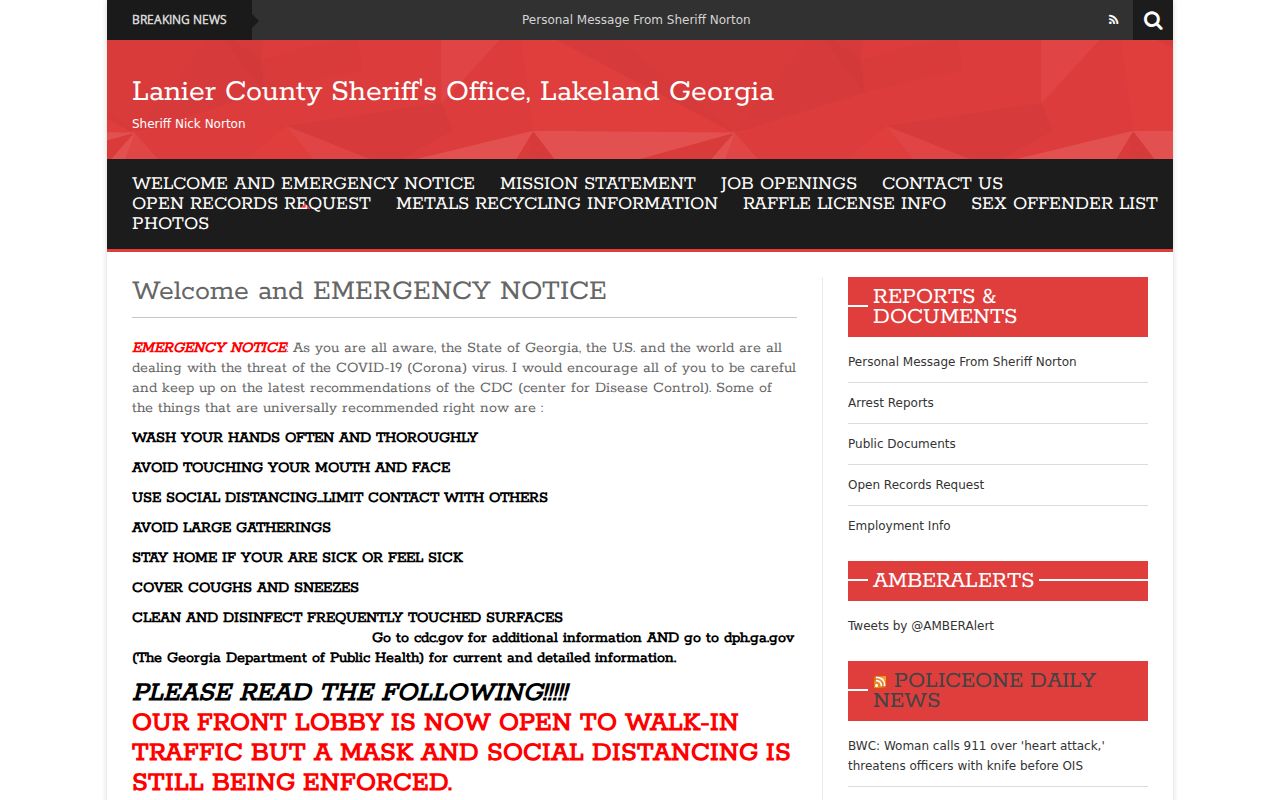
Call before visiting or mailing because some sheriff materials say Church Avenue, and no copy fee, room number, parking rule, or dedicated records hours were published.
Ask the jail desk for current custody, booking number, charges as booked, bond or hold status, and release information. Staff may lawfully withhold medical, housing, security, victim, or juvenile information, and the research did not confirm which profile fields staff will give by telephone. The jail answer is also time-sensitive: someone released or transferred may no longer appear in current custody even though the booking record still exists.
Custody can move beyond Church Road. A person serving a state sentence may appear in GDC Find an Offender, while a federal prisoner belongs in the Bureau of Prisons locator. VINELink can add participating-agency status notifications, but it remains a notification layer rather than the original custodian. Use the court judgment to understand the sentence and the holding agency to verify present location.
What a Lanier County Criminal Record Shows
A Georgia history may contain name, date of birth, Social Security number, sex, race, height, weight, arresting agency, arrest date, charges, final judicial disposition, and Georgia correctional custody. Operational identifiers can include a state identification number, OTN, and fingerprint transaction data. Public court or booking views may redact sensitive fields.
| Name & Identifiers | Legal name, aliases and descriptive identifiers; fingerprints provide stronger identity confirmation than a name match. |
|---|---|
| Arrest / Booking Data | Arrest date, agency, incident or warrant reference, intake time, booking charges, bond, holds, and release where disclosed. |
| Charges & Statutes | Each arrest cycle or filed count can carry a description and code citation; booking and prosecuted counts may differ. |
| Disposition | Convicted, acquitted, dismissed, nolle prosequi, dead docket, no-bill, or other reported outcome for each count. |
| Sentence | Confinement, probation, fines, restitution, or other court-imposed terms when recorded and public. |
| Custody / Supervision Status | County jail, GDC custody, and DCS supervision are separate systems whose dates and status should be checked at the source. |
Lanier Court Records on Main Street
The official clerk profile lists Patricia L. Bass as Lanier Clerk of Superior Court and identifies both Superior and Juvenile Courts. The counter at 56 W. Main Street, Suite 5, Lakeland, GA 31635 is open from 8:00 a.m. to noon and 1:00 to 5:00 p.m. Monday through Friday. Call 229-482-3594 before traveling, especially for archived files, certification costs, accepted payment, accessibility needs, or an uncertain court.
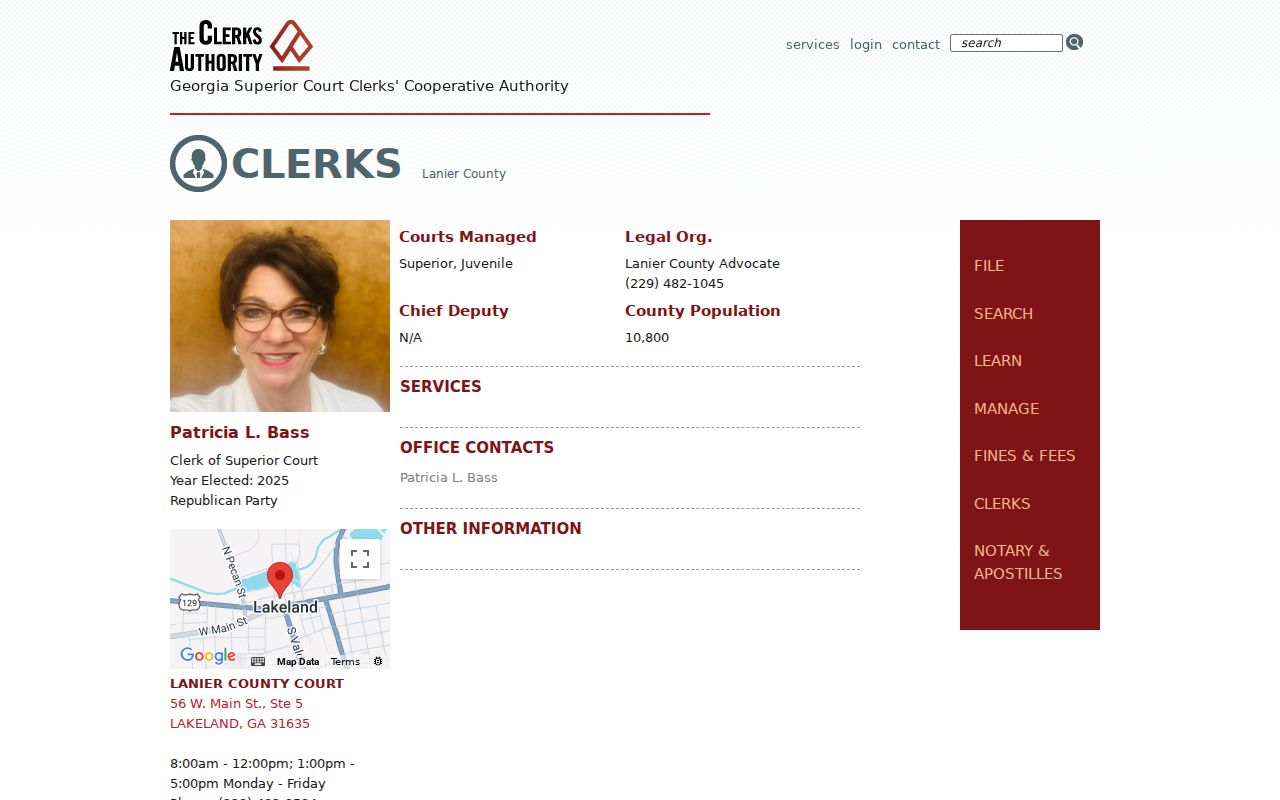
The profile confirms the office and hours, but it does not promise that every Lanier criminal document can be downloaded. PeachCourt may provide access for participating files; confirm coverage with the clerk.
Public Access Laws
Georgia uses custodian-specific access. The clerk holds judicial files, the sheriff holds its agency and jail records, and GCIC controls state criminal-history dissemination. An open-records request asks for existing agency records; it does not require an office to create a report, conduct research, or answer questions. Pending investigations, juvenile matters, victim details, medical information, and protected identifiers can be withheld or redacted.
Key Georgia laws:
O.C.G.A. §50-18-70 states Georgia's policy favoring open public records.
O.C.G.A. §50-18-71 sets the three-business-day response framework, reasonable charges, and first-quarter-hour rule.
O.C.G.A. §50-18-72 identifies exemptions, including rules for pending law-enforcement matters.
O.C.G.A. §35-3-34 governs dissemination of criminal-history information.
O.C.G.A. §35-3-37 covers correction, restriction, and time-expired disposition procedures.
Lanier Record Requests in Three Days
A focused request to the Lanier custodian should identify the record type, event date or date range, location, people or case numbers, preferred format and a cost ceiling. Ask for the initial incident report first if an investigation remains active, and request all segregable public portions if an exemption applies. The agency should respond within three business days by producing accessible records or explaining the timing and legal basis for delay or withholding.
The GCIC criminal-history FAQ explains inspection, fingerprinting, correction, and restriction routes for state repository data.
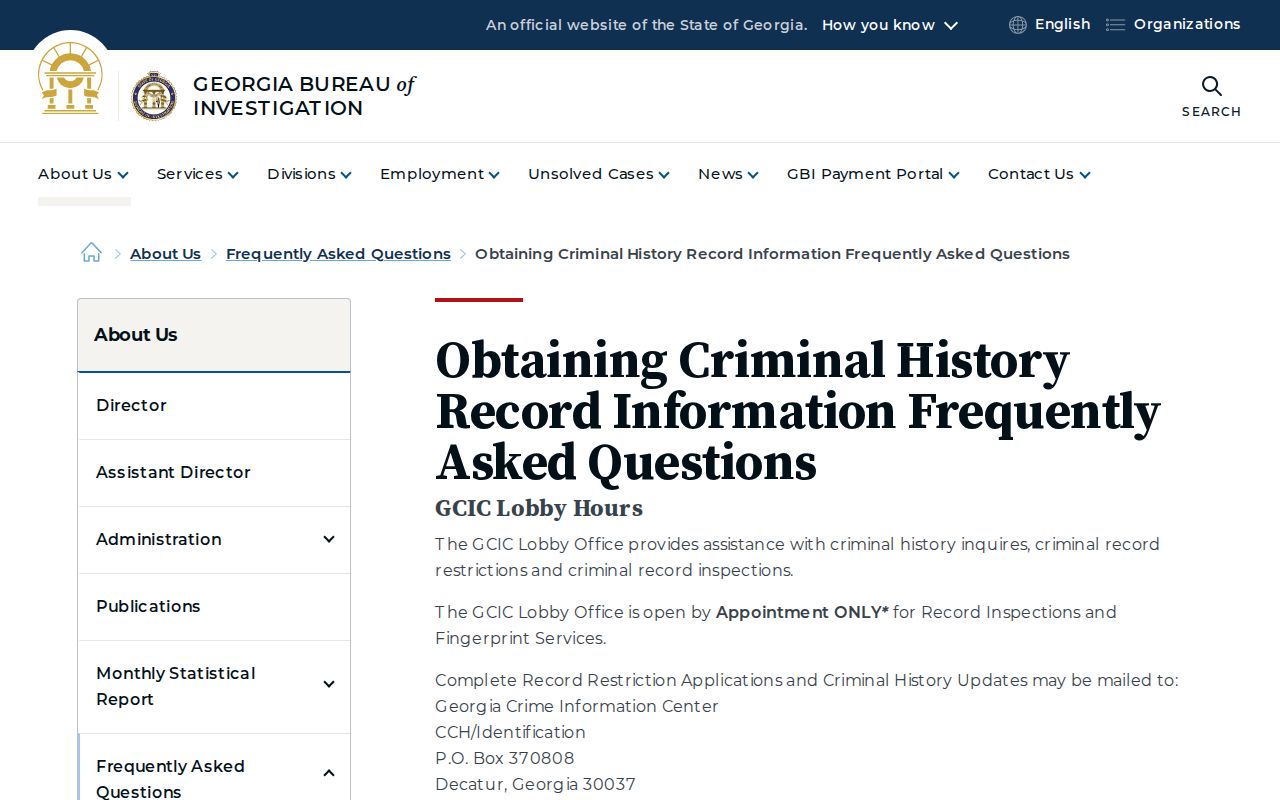
When a disposition is wrong or missing, obtain the correct court documentation and work through the originating agency because GCIC cannot independently rewrite the source submission.
Sealed, Expunged & Restricted
Georgia calls its principal relief process record restriction, though people often say expungement. Restriction limits ordinary public dissemination; it does not physically destroy every copy or prevent all criminal-justice access. Juvenile files, restricted arrest cycles, sealed court records, victim-identifying details, and active-investigation material may also be unavailable in ordinary searches.
For arrests before July 1, 2013, the applicant starts Section One of the GBI restriction form with the arresting agency; the agency and prosecutor complete later sections. For arrests on or after that date, contact the prosecutor because relief should be disposition-driven. Local processing may cost up to $50, and a denial may be appealed to Superior Court within 30 days. A certified final disposition from the Lanier clerk can establish how the case ended.
Common qualifying outcomes include dismissal, nolle prosequi, no-bill or not presented, acquittal, and some dead-docket or time-expired cases. An ordinary guilty disposition usually does not fit the nonconviction route, although First Offender and specific misdemeanor provisions create distinct paths. Restricting the GCIC arrest cycle and sealing the court file are related but separate steps; ask the prosecutor and clerk whether a sealing order is required after restriction.
Before filing, review the personal Georgia history and compare every charge with the certified disposition. A pre-2013 application needs applicant identifiers, arresting agency, arrest date, charges, and available OTN, SID, or case numbers. The arresting agency verifies its cycle and the prosecutor states the qualifying basis. Complete state applications typically take two to three weeks under the current guide, but local routing and missing documents can extend the process.
Lanier Record Matches Versus Fingerprints
A name-based result is a lead, particularly when common names, aliases, or incomplete birth data create several possibilities. Fingerprints tie the request to identity. The official GAPS and IdentoGO entry point requires the correct agency service code before scheduling.

No verified IdentoGO enrollment center sits inside Lanier County; use the live appointment system to find current locations by ZIP. For personal inspection, GCIC's Decatur lobby operates by advance appointment with no same-day appointments.
The Georgia Crime Information Center overview places criminal histories, GAPS, identification services, and registry administration within the same state program.
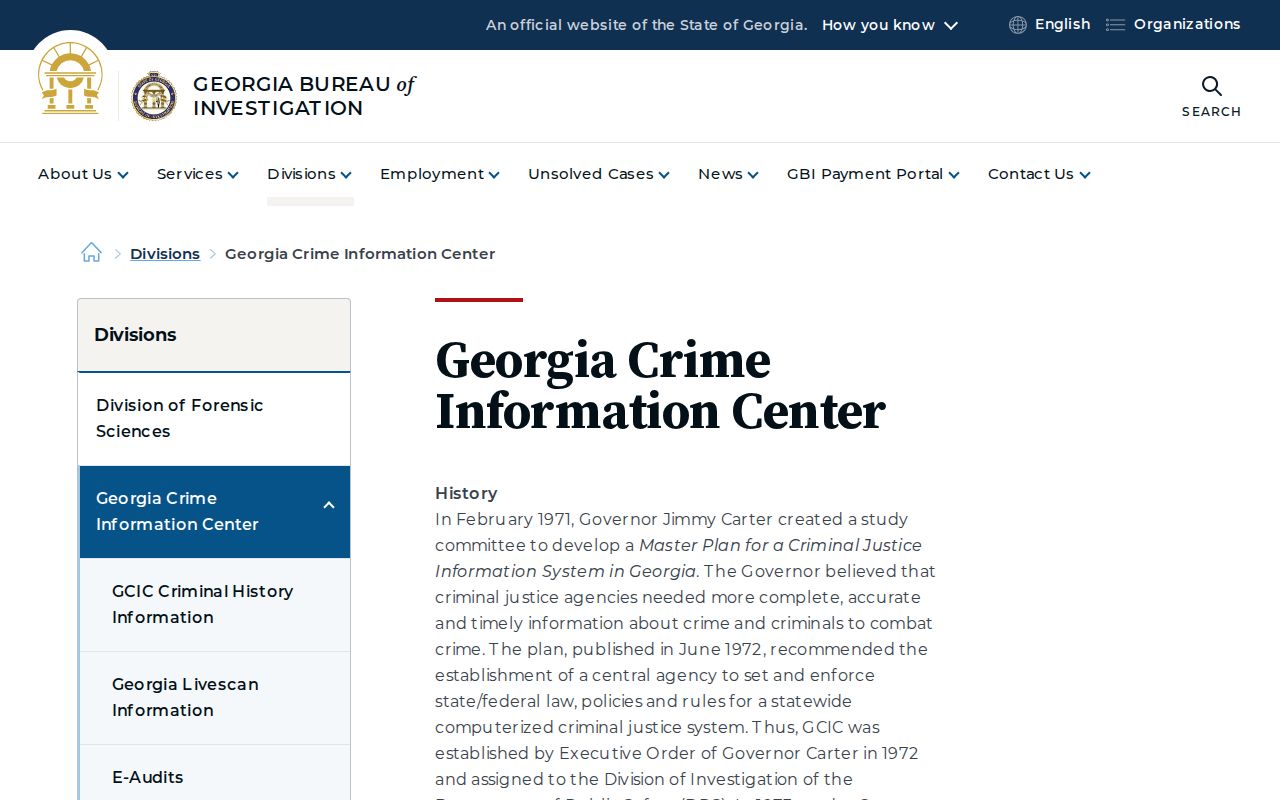
That shared administration does not merge local police reports, court documents, and state summaries into one record.
Criminal Records by City in Lanier County
Lakeland is Lanier County's only incorporated municipality and its county seat, so one city guide is correct. Lakeland Police creates its own incident and arrest reports; the county jail may create the later booking; Municipal Court handles city citations; and the Superior Court clerk handles felony prosecutions. A current official city population estimate was not available in QuickFacts, so no unsupported figure is attached to the card.
Lakeland Criminal History
County seat and sole incorporated city · follow city citations through Municipal Court and county felonies through the Lanier clerk.
Lanier Crime Data and Rate Swings
The Census Bureau estimated 10,623 Lanier County residents on July 1, 2025, compared with 9,877 in the 2020 census. In a small county, a modest change in raw incidents can create a sharp percentage or per-capita shift. Crime data should therefore identify the reporting agency, year, count, rate, and completeness rather than interpreting an isolated number as a durable trend.
The official Lanier County QuickFacts page supplies the population context.
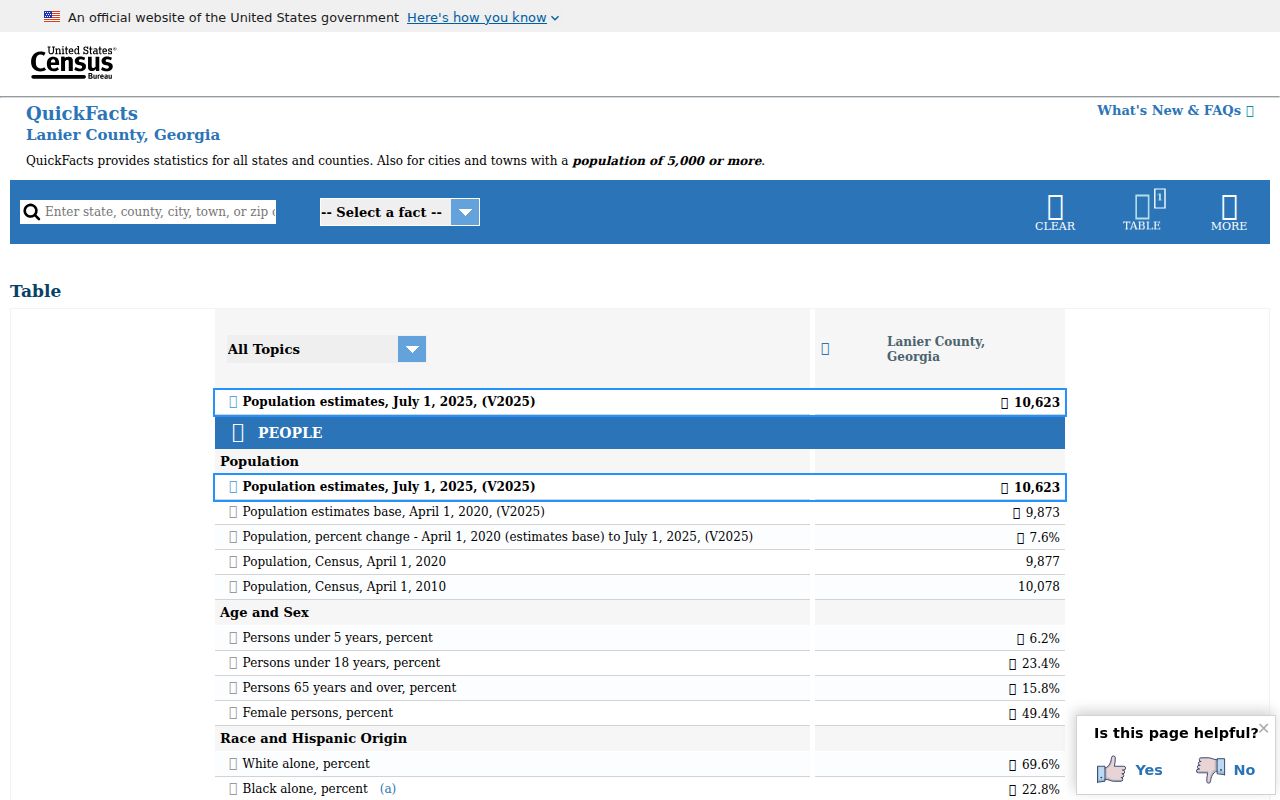
Population establishes scale; it does not establish whether a named person has a record or whether an agency reported every month.
For offense data, use the GBI Georgia crime statistics program and select the agency and year with care.
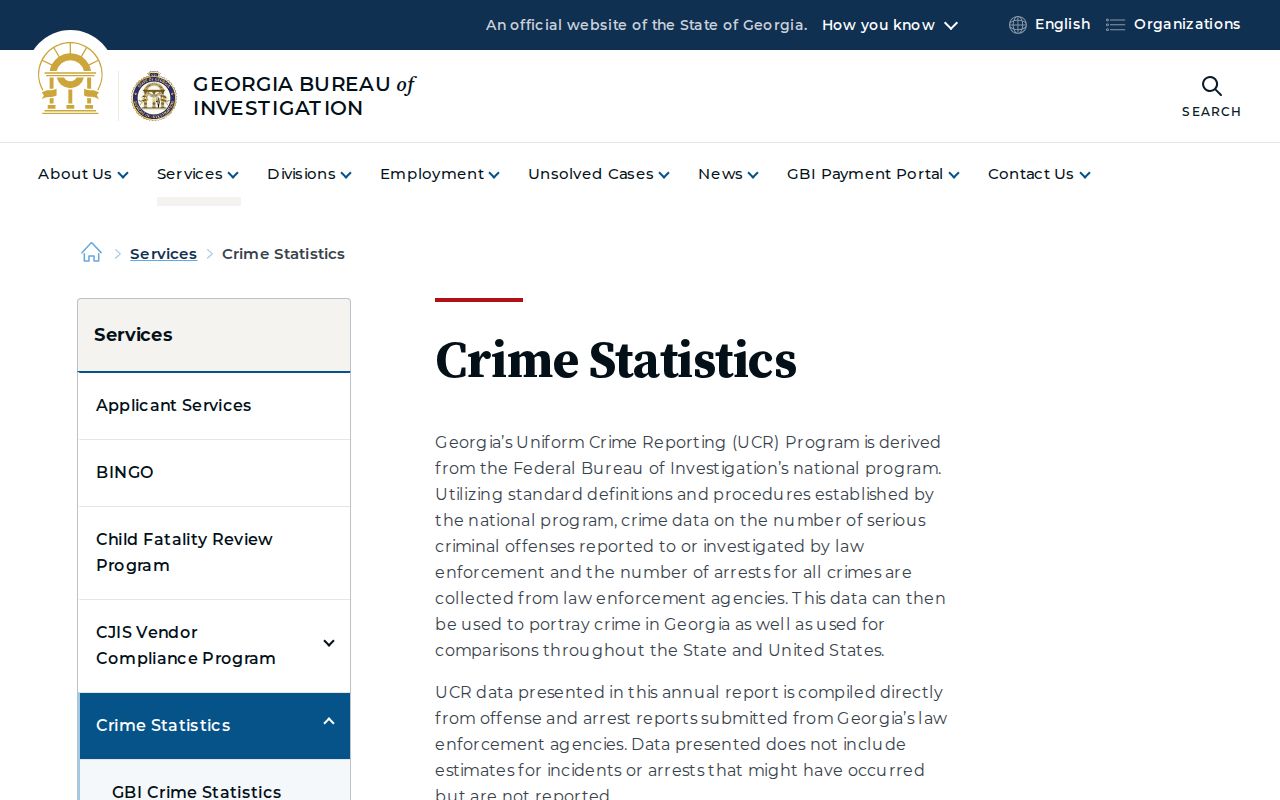
Missing or zero entries can reflect partial or absent reporting; they should not automatically be described as zero crime.